


Nature has always been the most skilled engineer. It gave people volcanic glass, formed by the rapid cooling of liquid lava when it comes in contact with the atmosphere, water, or cooler adjacent rocks.
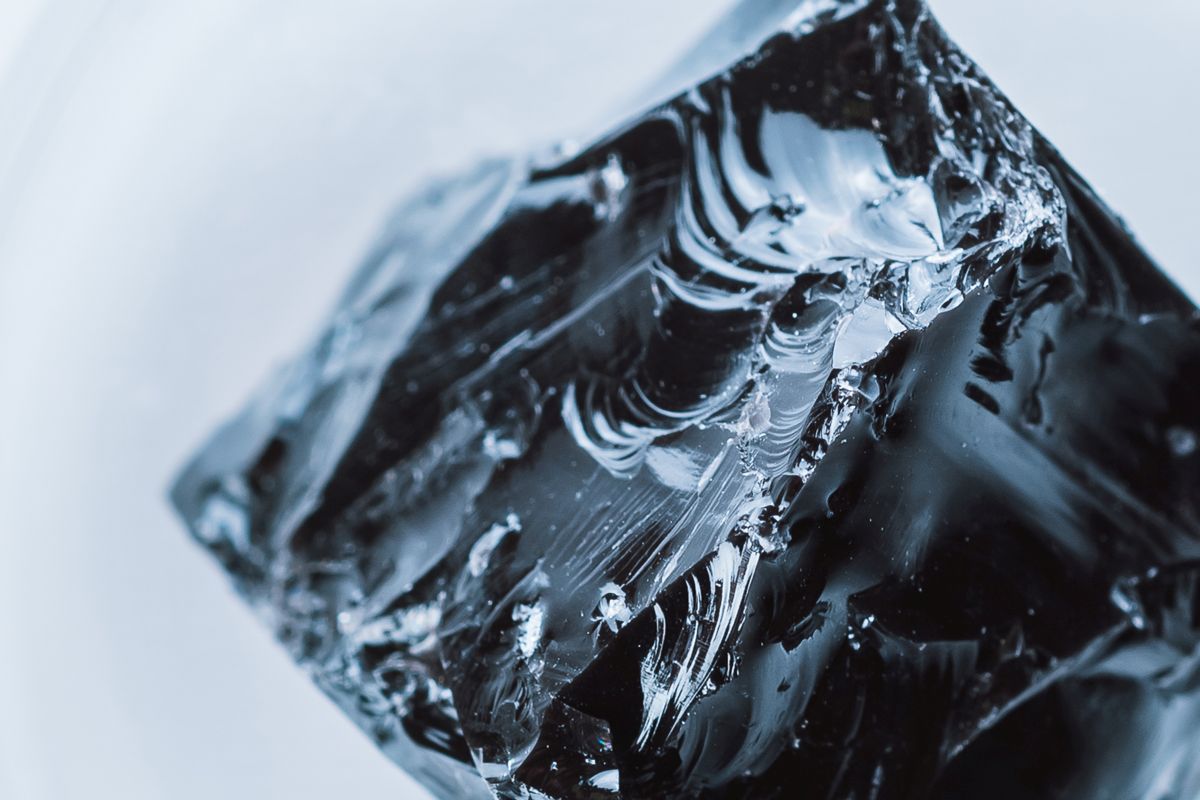
Due to its toughness, obsidian has had great importance ever since prehistoric times, when it was used for early cutting tools with sharp edges (knives, files, arrowheads and spearheads etc.). Incidentally, it is possible that obsidian was one of the first “goods” traded in those times. (The image above shows an obsidian core which, when struck on its wider, top part, yielded a stone blade.)
Obsidian is part of a wonderful story about how water, has and oxides can give rise to a multitude of colours and variations from black to red, brown and even blue or green, dotted or undotted, be they grey, green or yellow, golden or in the shape of snowflakes.
No wonder that obsidian has fascinated people, who as early as the 6th century BCE had fashioned it into statues of gods (Teotihuacan, the “place of those who have the road of the gods”, Mexico). In Roman times, obsidian was used to manufacture mosaics and decorations such as mirrors. This fascination survives to the present day with obsidian being used for creating works of art and semi-precious stones, with some people even making amulets they consider to bring luck and wisdom.
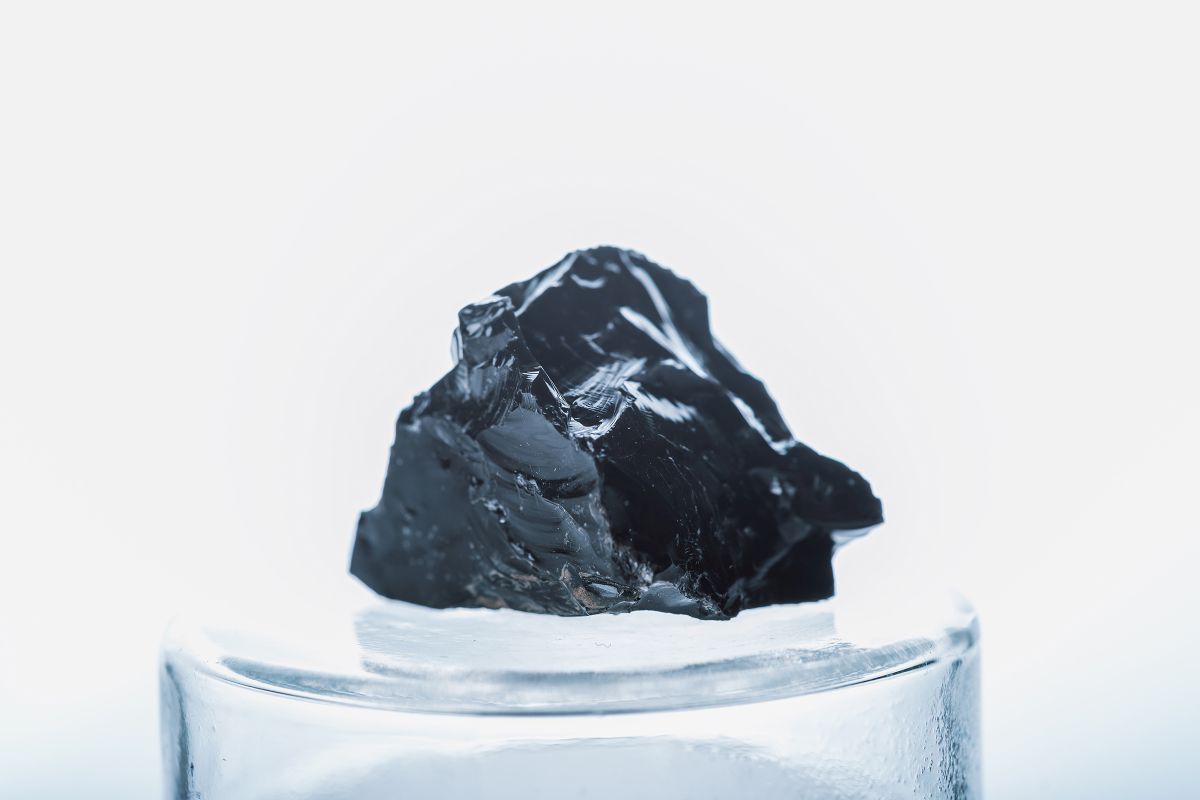
Next to solid-colour obsidian, there are also varieties featuring so-called snowflakes. These snowflakes are none other than the result of the glass undergoing “crystallisation”. Specimens of this type of obsidian are used for jewellery as gemstones. (The images above show examples of unpolished black obsidian, as well as polished snowflake obsidian.)



Source: Muzeul Judeţean Mureş