


The Romans adopted the techniques for glass production from the Egyptians, but they honed the initial technology to spectacular perfection. This novel technology was possible due to the advanced furnaces of the Romans, which allowed reaching higher temperatures. Common Roman glass, of a greenish hue (opaque) began to be used more and more. It was used for cups and chalices, for containers holding water, oil, wine, perfume etc., for baby bottles and other household items.
The expensive variety of Roman glass was obtained from very pure white sand, and was colourless and translucent (though not yet transparent!). It was used for precious crockery, trinkets, embellishments and ornaments. Next to these basic colours, the Roman masters also created countless other varieties of glass from those which seemed to be like precious stones (emerald, sapphire, opal, turquoise, ruby) to those that imitated wood or fruit (in their shape or colour).
Unguentarium vessels are among the first types of glass obtained through the technique of glassblowing. Unguentaria usually had a bulbous shape, a narrow, tubular neck, and lacked handles. Important artefacts of the same type as unguentaria were discovered at archaeological sites in Tulcea County.
(The pictures show various decorative objects from the Roman period made of glass, as well as a 3D reproduction based on an unguentarium-type bottleneck.)


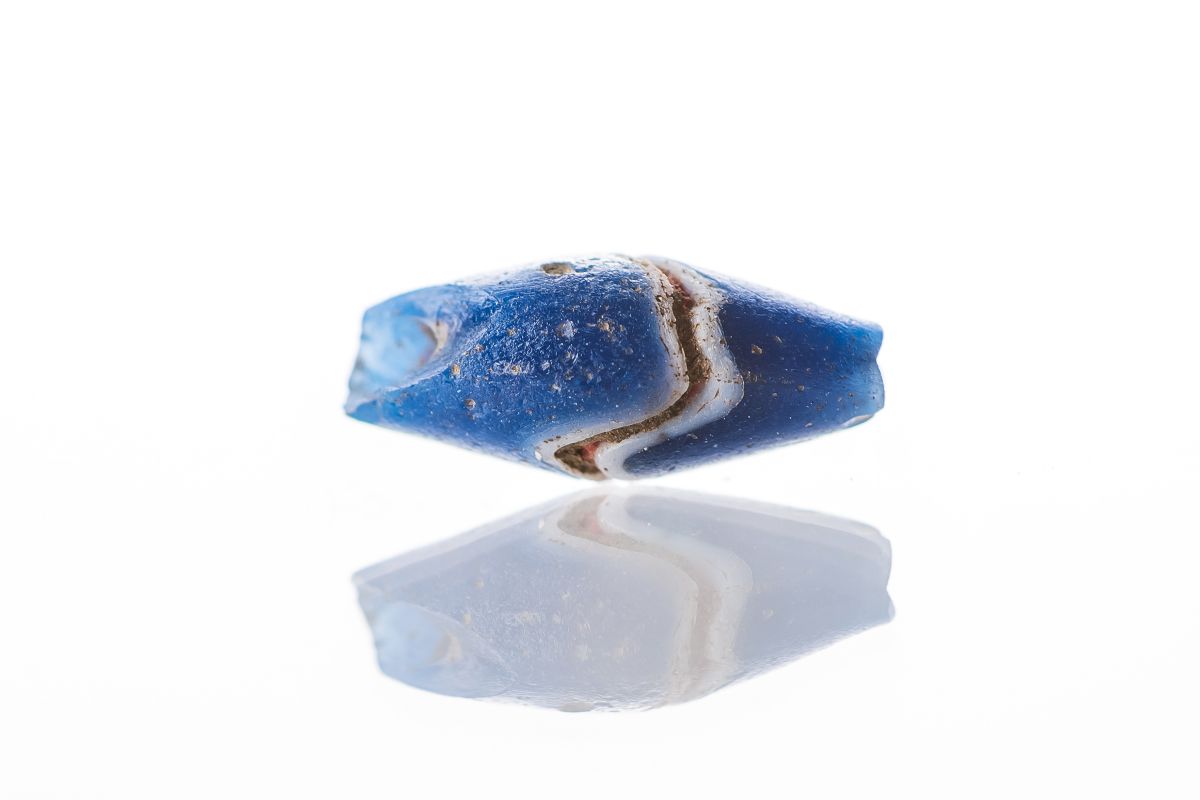
Source: Muzeul Judeţean Mureş
Reconstruction: Cloudscale Digital SRL