In the beginning there was sand and fire, and then events that produced small flashes of genius in the mind of ancient man, leading to the discovery of glass and what is now today its industry.
An important moment in the evolution of glass was the 1st century CE, when a Roman master invented a long and thin iron pipe fitted with a small sphere at one end, and on the other, a wooden extension through which air was blown in. Thus did the method of glassblowing appear, which was used for a long period of time.
As time passed and humankind evolved and became modernised, the procedures for the manufacturing of glass went from manual to semi-automatic shaping, and in the modern age, to complete automation.
Moulding through blowing, manual or automated, is still widespread in practice, since it is the only method which makes it possible to obtain glass objects which are hollow inside, have a narrow neck and thin walls.
The automation of glass shaping was incumbent upon solving the automation of how moulding machines were fed, an extremely important operation on which the productivity and the quality of these packaging products greatly depends. Currently, the most widely used feeding system in automated moulding machines for packaging glassware is the drop feeder.
The evolution of the field of glassmaking is an ongoing process, closely related to the needs and preoccupations of our daily lives. It is a certainty that today, glass has become a symbol of contemporary society.
These technological developments enable the mass production of glassware items as well as their standardisation, and these processes guarantee the superior quality of these products. Glassware produced this way can be used not only in pharmacies, but in the pharmaceutical and food industry as well, where standardisation enables the use of high-speed filling machinery.
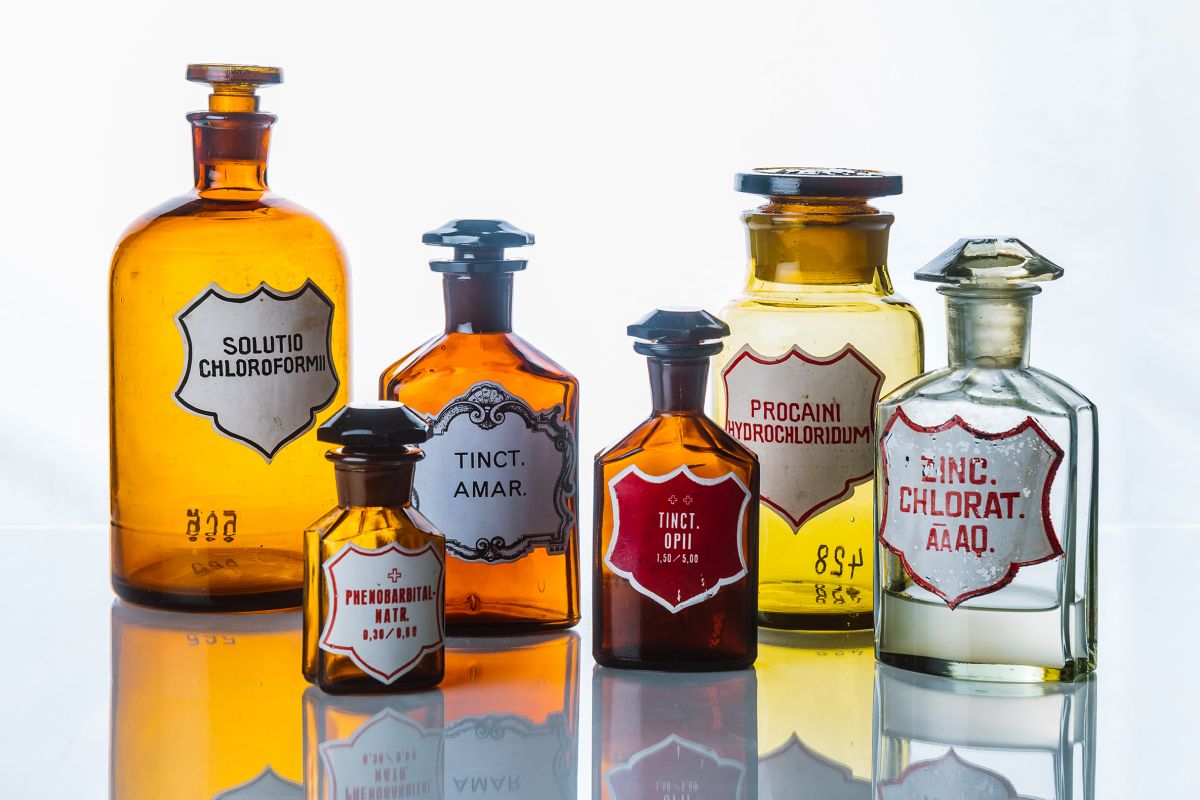
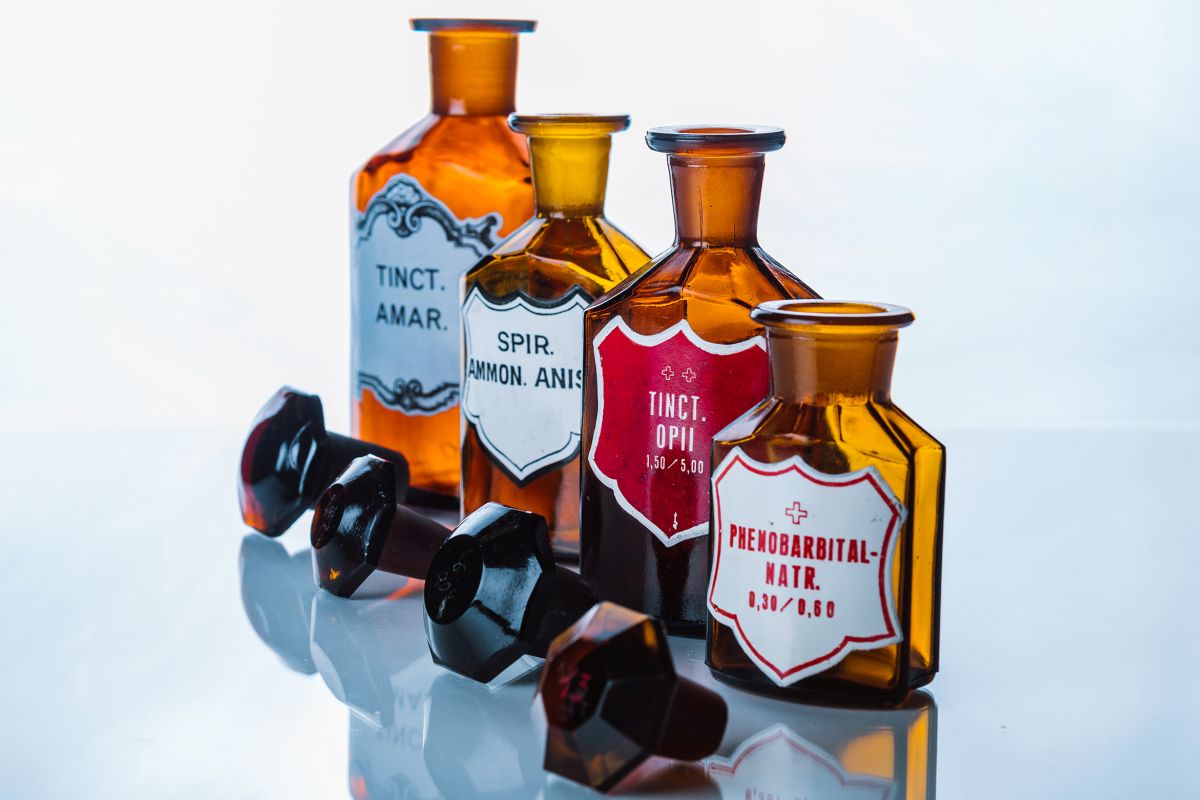
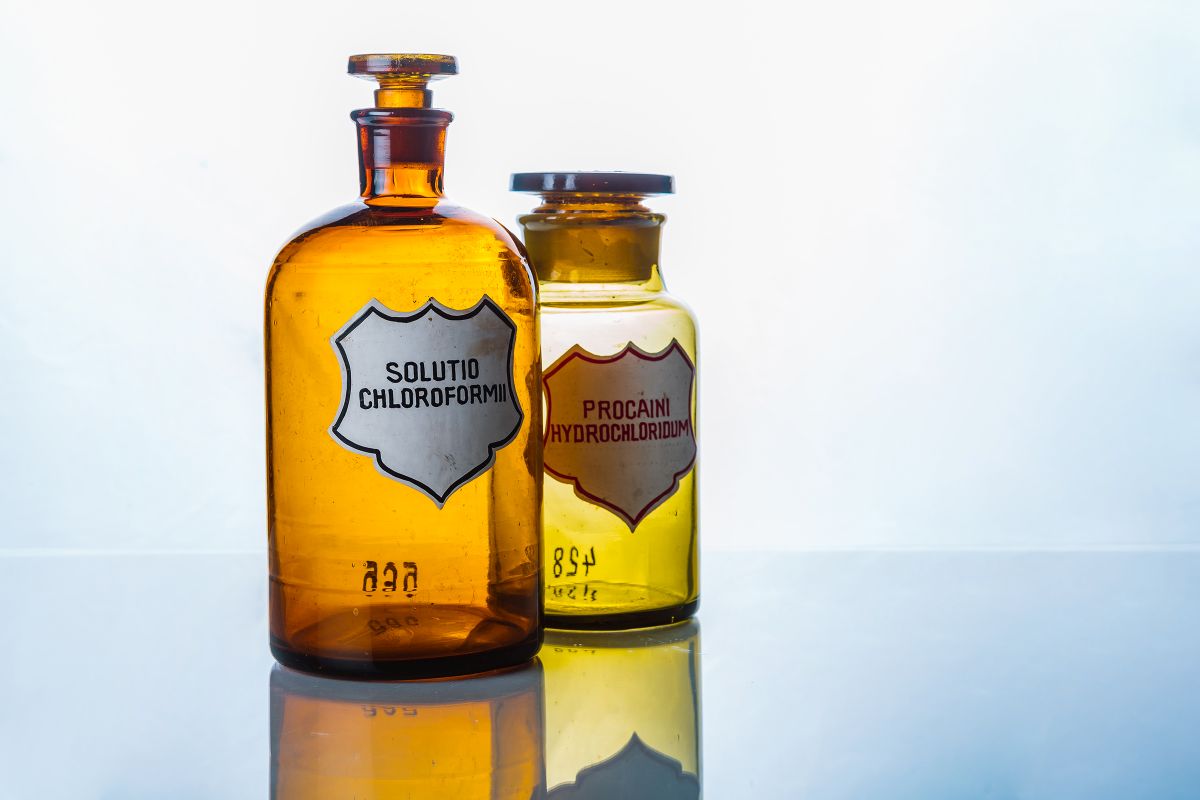
Above, pictured in the front row are pharmacy bottles made at the beginning of the 20th century (shaped manually using individual moulds), while the back row features two round bottles obtained through the method of automatic shaping (mid-20th century).